Buy corecoaching.eu ?
We are moving the project
corecoaching.eu .
Are you interested in purchasing the domain
corecoaching.eu ?
domain@kv-gmbh.de · 0541-91531010
Buy corecoaching.eu ?
What is polymorphism in Java programming?
Polymorphism in Java programming refers to the ability of a method to behave differently based on the object it is called on. This means that a single method can have different implementations depending on the type of object it is called on. This allows for more flexibility and reusability in code, as different objects can use the same method name but have different behaviors. Polymorphism is achieved through method overloading and method overriding in Java. **
How is identification done after VNTR polymorphism?
Identification after VNTR polymorphism is done by comparing the number of repeats in the variable number tandem repeats (VNTR) region of DNA between different individuals. This is typically done using a technique called polymerase chain reaction (PCR) to amplify the VNTR region, followed by gel electrophoresis to separate the DNA fragments based on size. The resulting pattern of DNA fragments, known as a DNA fingerprint, can then be compared between individuals to determine if they share a common genetic profile. This method is commonly used in forensic science and paternity testing to establish relationships between individuals based on their VNTR profiles. **

Similar search terms for Polymorphism
Top-Angebote
Products related to Polymorphism:
-
Little Brown Book Group No Limits: Blow the Cap Off Your Capacity by John C. Maxwell – Personal Growth & Leadership Development GuideNo Limits: Blow the CAP Off Your Capacity Description We often treat the word capacity as if it were a natural law of limitation. Unfortunately; most of us are much more comfortable defining what we perceive is off limits rather than what's possible. Could it be that many people have allowed what they perceive as capacity to define them? Have they allowed their perception to limit their attitudes about their potential? In his newest book; John Maxwell identifies 17 core capacities. Some of these are abilities we all already possess; such as energy; creativity and leadership. Others are aspects of our lives controlled by our choices; like our attitudes; character; and intentionality. Maxwell examines each of these 17 capacities; and provides clear and actionable advice on how you can increase your potential in each. He will guide you on how to identify; grow; and apply your critical capacities to your daily life. Once you've blown the 'cap' off your capacities; you'll find yourself more successful--and fulfilled--in your daily life.5,99 £*Shipping: 2,99 £Secure redirect to the provider
-
Penguin/Pan Macmillan Designing Your Life, Radical Candor and Quiet 3 Books Collection Set Personal Development, Leadership, Career Success & Self ImprovementDesigning Your Life, Radical Candor and Quiet 3 Books Collection Set Designing Your Life by Bill Burnett & Dave Evans Stanford innovators Bill Burnett and Dave Evans show us how design thinking can help us create a life that is both meaningful and fulfilling, regardless of who and where we are, our careers and our age. Designing Your Life puts forward the idea that the same design thinking responsible for amazing technology, products and spaces can be used to build towards a better life and career by a design of your own making. Radical Candor by Kim Scott Radical Candor by Kim Scott is a groundbreaking leadership and communication guide that teaches how to give feedback effectively, build trust, and create high-performing teams without becoming harsh—or avoiding difficult conversations. Based on Scott’s experience at Google, Apple and Silicon Valley startups, Radical Candor introduces a simple but powerful framework built on two pillars: Care Personally Challenge Directly The book provides practical tools for giving honest feedback, fostering open communication, strengthening working relationships, and becoming a more compassionate and impactful leader. Quiet by Susan Cain Quiet, the Sunday Times and New York Times Bestseller by Susan Cain, will permanently change how we see introverts - and how you see yourself. Our lives are driven by a fact most of us cant name and dont understand: whether were an introvert or an extrovert. This defines who our friends and lovers are, which careers we choose, and whether we blush when were embarrassed. At least a third of us are on the introverted side. Some of the worlds most talented people are introverts. Without them, we wouldnt have the Apple computer, the theory of relativity and Van Goghs sunflowers.16,99 £*Shipping: 2,99 £Secure redirect to the provider
-
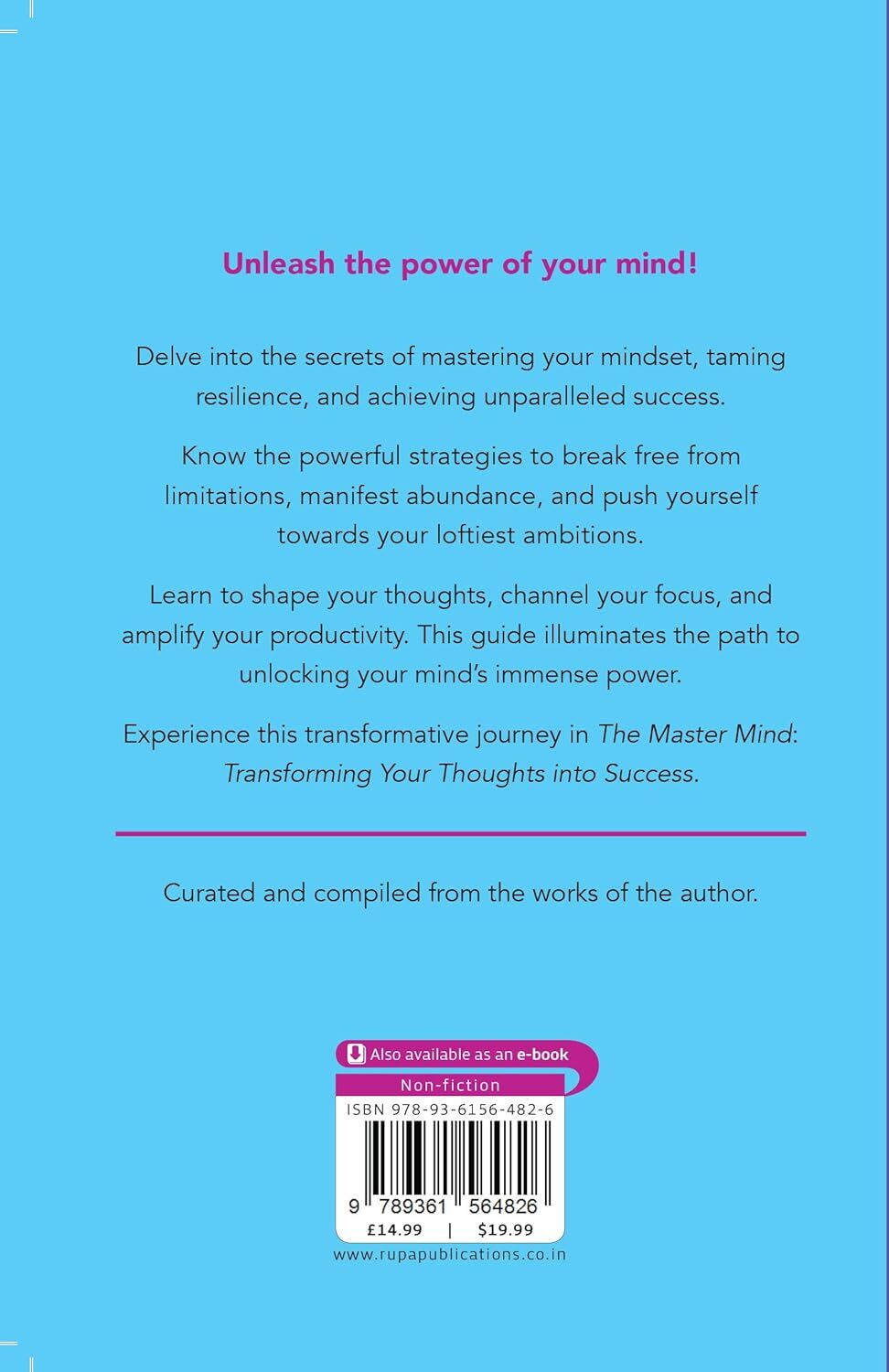
Rupa Publications The Master Mind by Napoleon Hill - Paperback Self-Help Book - Mindset, Focus & Success - Personal Development GiftDiscover the timeless principles of personal development in this brand-new paperback edition of The Master Mind by Napoleon Hill. Published by Rupa Publications, this compact guide distills Hill's philosophy on mindset, focus, and personal achievement into clear, actionable steps. It's ideal for students, professionals, parents, and anyone building a personal development library. The Master Mind explores how disciplined thought and sustained focus can transform ordinary effort into extraordinary results, drawing on Hill's decades of research into the habits and mindsets of history's most successful individuals.2,99 £*Shipping: 2,99 £Secure redirect to the provider
-
Rethink Press Meltdown: How to Turn Your Hardship into Happiness by Jamie Alderton - Paperback Self-Help Book on Resilience, Mindset & Business GrowthMeltdown: How to Turn Your Hardship into Happiness is a practical self-help guide by fitness entrepreneur and transformation coach Jamie Alderton. Written for anyone whose life, work or wellbeing feels like it's falling apart, this book shows readers how to measure what's broken in their body, brain and business, then apply proven strategies to rebuild momentum, confidence and lasting happiness. Ever feel like your life is having a complete meltdown? This is the honest question at the heart of Jamie Alderton's guide. Rather than offering vague motivational platitudes, Meltdown gives readers a structured, repeatable framework for turning hardship into genuine progress. Alderton breaks life down into three core areas — body, brain and business — and teaches readers how to identify exactly what's gone off track in each. Published by Rethink Press, this paperback book is a brand-new self-help guide for those seeking to rebuild and find happiness.3,49 £*Shipping: 2,99 £Secure redirect to the provider



-
What is polymorphism in object-oriented programming?
Polymorphism in object-oriented programming refers to the ability of different objects to respond to the same message or method call in different ways. This means that objects of different classes can be treated as objects of a common superclass, allowing for more flexible and reusable code. Polymorphism allows for the implementation of methods that can work with objects of various types, making the code more adaptable and easier to maintain. This concept is a key feature of object-oriented programming and helps to promote code reusability and flexibility. **
-
What is dynamic polymorphism in object-oriented programming?
Dynamic polymorphism in object-oriented programming refers to the ability of a program to determine at runtime which method to invoke based on the actual type of object being referenced. This allows for flexibility and extensibility in the code, as different objects can exhibit different behaviors even if they belong to the same class hierarchy. Dynamic polymorphism is achieved through method overriding, where a subclass provides a specific implementation of a method defined in its superclass. This feature enables code reusability and promotes the principle of "write once, use many times" in object-oriented programming. **
-
What is the difference between polymorphism, allotropy, and pseudopolymorphism?
Polymorphism refers to the ability of a substance to exist in different crystal structures or forms. Allotropy, on the other hand, specifically refers to the existence of an element in multiple different forms, each with its own unique physical properties. Pseudopolymorphism, also known as solvomorphism, occurs when a substance appears to have different crystal forms due to the presence of solvent molecules within its crystal lattice. In summary, while polymorphism and allotropy refer to the different forms of a substance, pseudopolymorphism involves the influence of solvent molecules on the crystal structure. **
-
What is the difference between inheritance and polymorphism in Java?
Inheritance in Java allows a class to inherit properties and behaviors from another class, promoting code reusability. On the other hand, polymorphism allows objects of different classes to be treated as objects of a common superclass, enabling flexibility and extensibility in the code. Inheritance establishes an "is-a" relationship between classes, while polymorphism enables an object to take on multiple forms based on its context. **


What is the difference between substitution and polymorphism in Java?
Substitution refers to the ability to use a derived class object wherever a base class object is expected. This allows for code reusability and flexibility in the use of objects. Polymorphism, on the other hand, refers to the ability of a reference variable to point to different types of objects and invoke methods specific to those objects at runtime. In Java, polymorphism is achieved through method overriding, where a subclass provides a specific implementation of a method defined in its superclass. Overall, substitution is a concept related to inheritance and the use of derived classes, while polymorphism is a broader concept related to the ability of objects to take on different forms at runtime. **
What is an abstract class and how does polymorphism work in relation to it?
An abstract class is a class that cannot be instantiated on its own and is meant to be subclassed. It may contain abstract methods that must be implemented by its subclasses. Polymorphism allows objects of different classes that are related through inheritance to be treated as objects of the parent abstract class. This means that a method defined in the abstract class can be overridden in its subclasses, allowing different implementations of the same method to be called based on the type of object. **
Top-Angebote
Products related to Polymorphism:
-
Wilco Publishing Think and Grow Rich by Napoleon Hill Classic Personal Development, Success, Wealth, Mindset & Motivation Self Help BookDiscover one of the most influential personal development classics with Think and Grow Rich by Napoleon Hill. Originally published in 1937, Think and Grow Rich explores the principles and habits Hill associated with achievement, ambition, persistence, goal setting and personal success. Rather than focusing solely on money, the book examines how mindset, clear goals, determination and consistent action can influence progress towards personal and professional ambitions. Hill presents principles intended to help readers develop greater focus, confidence and persistence when pursuing their goals. A longstanding classic in the fields of self-help, motivation, business and personal development, Think and Grow Rich remains popular with entrepreneurs, professionals and readers interested in improving their approach to achievement and success. Whether you're building a personal development library, looking for motivational reading or searching for a gift for an aspiring entrepreneur, this enduring classic is an excellent choice. Key Features Classic personal development book by Napoleon Hill Focuses on success, mindset and goal setting Explores motivation, persistence and achievement Popular with entrepreneurs and business readers Ideal for self-improvement and motivational reading Timeless addition to a personal development library Great gift for business and self-help readers2,99 £*Shipping: 1,99 £Secure redirect to the provider
-
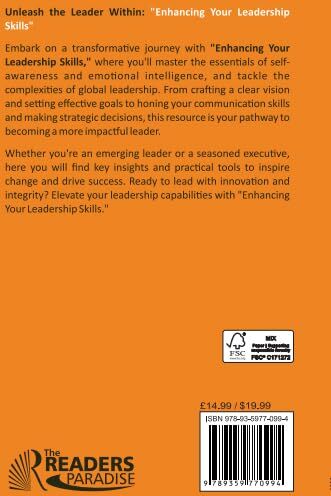
The Readers Paradise Enhancing Your Leadership Skills: A Practical Handbook for Success by Prof. V.K.Simon - Non Fiction Paperback - Leadership & Professional DevelopmentEnhance your leadership skills with this practical handbook by Prof. V.K.Simon. Written for anyone looking to lead with confidence and clarity, it blends self-awareness, emotional intelligence, and real-world strategy to help you achieve success. Whether you're a first-time manager or a seasoned executive, this compact guide delivers tools to strengthen decision-making, communication, and team impact in a fast-changing global workplace. It's built around the idea that great leadership is learned through practice, not theory alone, and covers the core competencies every effective leader needs, starting with self-awareness and emotional intelligence.2,99 £*Shipping: 2,99 £Secure redirect to the provider
-
Little Brown Book Group No Limits: Blow the Cap Off Your Capacity by John C. Maxwell – Personal Growth & Leadership Development GuideNo Limits: Blow the CAP Off Your Capacity Description We often treat the word capacity as if it were a natural law of limitation. Unfortunately; most of us are much more comfortable defining what we perceive is off limits rather than what's possible. Could it be that many people have allowed what they perceive as capacity to define them? Have they allowed their perception to limit their attitudes about their potential? In his newest book; John Maxwell identifies 17 core capacities. Some of these are abilities we all already possess; such as energy; creativity and leadership. Others are aspects of our lives controlled by our choices; like our attitudes; character; and intentionality. Maxwell examines each of these 17 capacities; and provides clear and actionable advice on how you can increase your potential in each. He will guide you on how to identify; grow; and apply your critical capacities to your daily life. Once you've blown the 'cap' off your capacities; you'll find yourself more successful--and fulfilled--in your daily life.5,99 £*Shipping: 2,99 £Secure redirect to the provider
-
Penguin/Pan Macmillan Designing Your Life, Radical Candor and Quiet 3 Books Collection Set Personal Development, Leadership, Career Success & Self ImprovementDesigning Your Life, Radical Candor and Quiet 3 Books Collection Set Designing Your Life by Bill Burnett & Dave Evans Stanford innovators Bill Burnett and Dave Evans show us how design thinking can help us create a life that is both meaningful and fulfilling, regardless of who and where we are, our careers and our age. Designing Your Life puts forward the idea that the same design thinking responsible for amazing technology, products and spaces can be used to build towards a better life and career by a design of your own making. Radical Candor by Kim Scott Radical Candor by Kim Scott is a groundbreaking leadership and communication guide that teaches how to give feedback effectively, build trust, and create high-performing teams without becoming harsh—or avoiding difficult conversations. Based on Scott’s experience at Google, Apple and Silicon Valley startups, Radical Candor introduces a simple but powerful framework built on two pillars: Care Personally Challenge Directly The book provides practical tools for giving honest feedback, fostering open communication, strengthening working relationships, and becoming a more compassionate and impactful leader. Quiet by Susan Cain Quiet, the Sunday Times and New York Times Bestseller by Susan Cain, will permanently change how we see introverts - and how you see yourself. Our lives are driven by a fact most of us cant name and dont understand: whether were an introvert or an extrovert. This defines who our friends and lovers are, which careers we choose, and whether we blush when were embarrassed. At least a third of us are on the introverted side. Some of the worlds most talented people are introverts. Without them, we wouldnt have the Apple computer, the theory of relativity and Van Goghs sunflowers.16,99 £*Shipping: 2,99 £Secure redirect to the provider
-
What is polymorphism in Java programming?
Polymorphism in Java programming refers to the ability of a method to behave differently based on the object it is called on. This means that a single method can have different implementations depending on the type of object it is called on. This allows for more flexibility and reusability in code, as different objects can use the same method name but have different behaviors. Polymorphism is achieved through method overloading and method overriding in Java. **
-
How is identification done after VNTR polymorphism?
Identification after VNTR polymorphism is done by comparing the number of repeats in the variable number tandem repeats (VNTR) region of DNA between different individuals. This is typically done using a technique called polymerase chain reaction (PCR) to amplify the VNTR region, followed by gel electrophoresis to separate the DNA fragments based on size. The resulting pattern of DNA fragments, known as a DNA fingerprint, can then be compared between individuals to determine if they share a common genetic profile. This method is commonly used in forensic science and paternity testing to establish relationships between individuals based on their VNTR profiles. **
-
What is polymorphism in object-oriented programming?
Polymorphism in object-oriented programming refers to the ability of different objects to respond to the same message or method call in different ways. This means that objects of different classes can be treated as objects of a common superclass, allowing for more flexible and reusable code. Polymorphism allows for the implementation of methods that can work with objects of various types, making the code more adaptable and easier to maintain. This concept is a key feature of object-oriented programming and helps to promote code reusability and flexibility. **
-
What is dynamic polymorphism in object-oriented programming?
Dynamic polymorphism in object-oriented programming refers to the ability of a program to determine at runtime which method to invoke based on the actual type of object being referenced. This allows for flexibility and extensibility in the code, as different objects can exhibit different behaviors even if they belong to the same class hierarchy. Dynamic polymorphism is achieved through method overriding, where a subclass provides a specific implementation of a method defined in its superclass. This feature enables code reusability and promotes the principle of "write once, use many times" in object-oriented programming. **
Similar search terms for Polymorphism
-
Rupa Publications The Master Mind by Napoleon Hill - Paperback Self-Help Book - Mindset, Focus & Success - Personal Development GiftDiscover the timeless principles of personal development in this brand-new paperback edition of The Master Mind by Napoleon Hill. Published by Rupa Publications, this compact guide distills Hill's philosophy on mindset, focus, and personal achievement into clear, actionable steps. It's ideal for students, professionals, parents, and anyone building a personal development library. The Master Mind explores how disciplined thought and sustained focus can transform ordinary effort into extraordinary results, drawing on Hill's decades of research into the habits and mindsets of history's most successful individuals.2,99 £*Shipping: 2,99 £Secure redirect to the provider
-
Rethink Press Meltdown: How to Turn Your Hardship into Happiness by Jamie Alderton - Paperback Self-Help Book on Resilience, Mindset & Business GrowthMeltdown: How to Turn Your Hardship into Happiness is a practical self-help guide by fitness entrepreneur and transformation coach Jamie Alderton. Written for anyone whose life, work or wellbeing feels like it's falling apart, this book shows readers how to measure what's broken in their body, brain and business, then apply proven strategies to rebuild momentum, confidence and lasting happiness. Ever feel like your life is having a complete meltdown? This is the honest question at the heart of Jamie Alderton's guide. Rather than offering vague motivational platitudes, Meltdown gives readers a structured, repeatable framework for turning hardship into genuine progress. Alderton breaks life down into three core areas — body, brain and business — and teaches readers how to identify exactly what's gone off track in each. Published by Rethink Press, this paperback book is a brand-new self-help guide for those seeking to rebuild and find happiness.3,49 £*Shipping: 2,99 £Secure redirect to the provider
-
Inspired Finds Growth Mindset Poster Therapy Office Wall Art Social Worker Decor Print growth Mindset Affirmations 11.81x16.54 InCreate a space that inspires growth, reflection, and positivity with this meaningful growth mindset poster designed for professionals who care deeply about impact. Whether you're a counselor, therapist, or educator, this piece adds purpose to your...46,99 $*Shipping: 0,00 $Secure redirect to the provider
-
Inspired Finds Growth Mindset Poster Therapy Office Wall Art Social Worker Decor Print growth Mindset Affirmations 19.69x29.53 InCreate a space that inspires growth, reflection, and positivity with this meaningful growth mindset poster designed for professionals who care deeply about impact. Whether you're a counselor, therapist, or educator, this piece adds purpose to your...60,99 $*Shipping: 0,00 $Secure redirect to the provider
-
What is the difference between polymorphism, allotropy, and pseudopolymorphism?
Polymorphism refers to the ability of a substance to exist in different crystal structures or forms. Allotropy, on the other hand, specifically refers to the existence of an element in multiple different forms, each with its own unique physical properties. Pseudopolymorphism, also known as solvomorphism, occurs when a substance appears to have different crystal forms due to the presence of solvent molecules within its crystal lattice. In summary, while polymorphism and allotropy refer to the different forms of a substance, pseudopolymorphism involves the influence of solvent molecules on the crystal structure. **
-
What is the difference between inheritance and polymorphism in Java?
Inheritance in Java allows a class to inherit properties and behaviors from another class, promoting code reusability. On the other hand, polymorphism allows objects of different classes to be treated as objects of a common superclass, enabling flexibility and extensibility in the code. Inheritance establishes an "is-a" relationship between classes, while polymorphism enables an object to take on multiple forms based on its context. **
-
What is the difference between substitution and polymorphism in Java?
Substitution refers to the ability to use a derived class object wherever a base class object is expected. This allows for code reusability and flexibility in the use of objects. Polymorphism, on the other hand, refers to the ability of a reference variable to point to different types of objects and invoke methods specific to those objects at runtime. In Java, polymorphism is achieved through method overriding, where a subclass provides a specific implementation of a method defined in its superclass. Overall, substitution is a concept related to inheritance and the use of derived classes, while polymorphism is a broader concept related to the ability of objects to take on different forms at runtime. **
-
What is an abstract class and how does polymorphism work in relation to it?
An abstract class is a class that cannot be instantiated on its own and is meant to be subclassed. It may contain abstract methods that must be implemented by its subclasses. Polymorphism allows objects of different classes that are related through inheritance to be treated as objects of the parent abstract class. This means that a method defined in the abstract class can be overridden in its subclasses, allowing different implementations of the same method to be called based on the type of object. **
* All prices are inclusive of VAT and, if applicable, plus shipping costs. The offer information is based on the details provided by the respective shop and is updated through automated processes. Real-time updates do not occur, so deviations can occur in individual cases. ** Note: Parts of this content were created by AI.